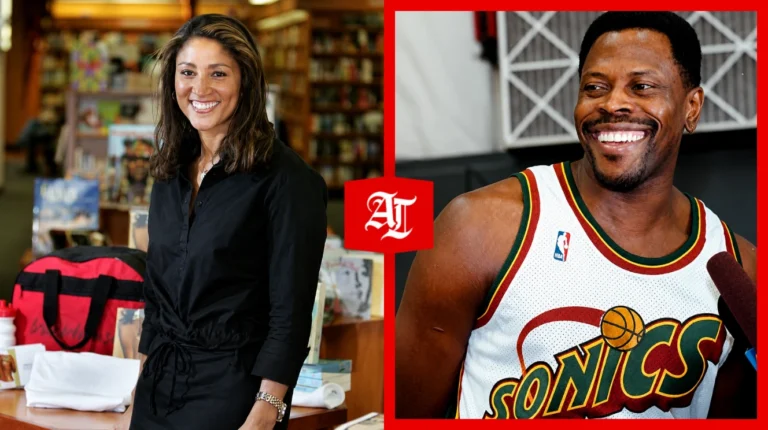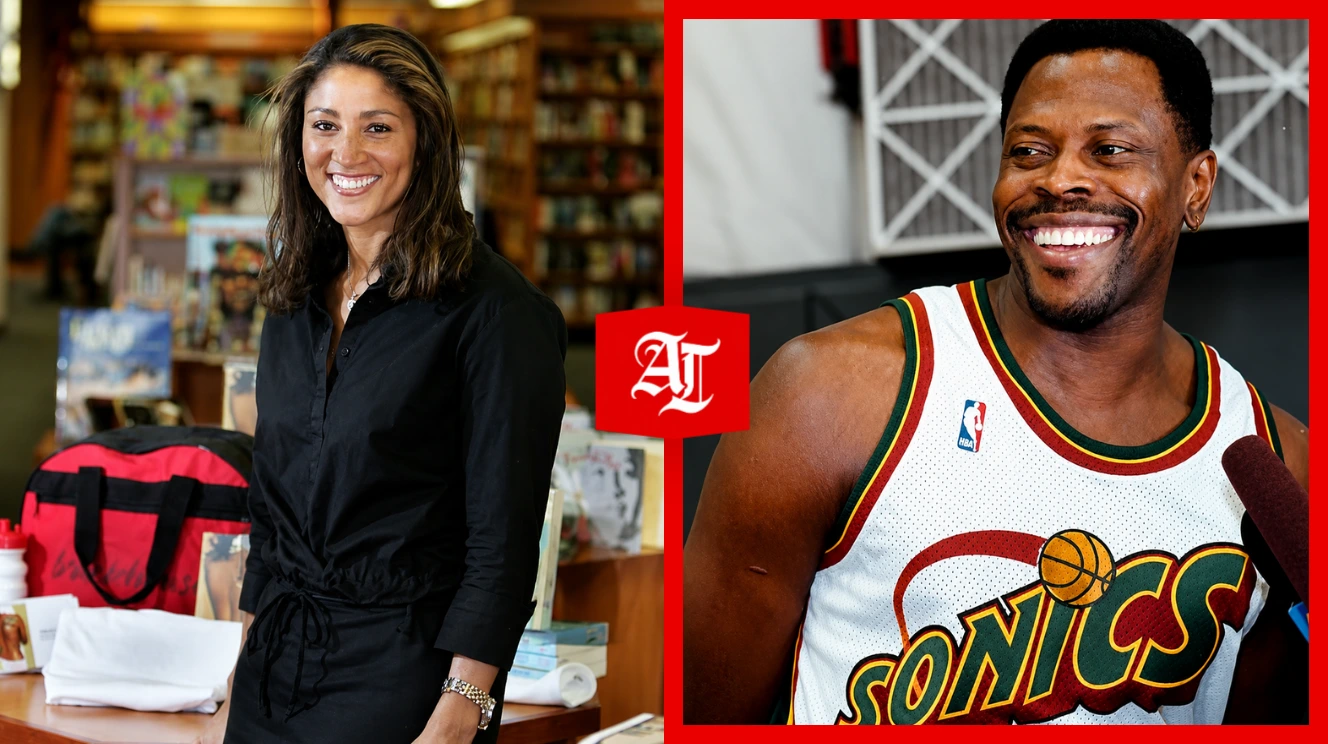
Rita Williams-Ewing is an American author, entrepreneur, and cultural advocate born in the United States. Best known publicly as the former wife of NBA legend Patrick Ewing, she holds degrees in nursing and law, co-authored the novel Homecourt Advantage with Crystal McCrary Anthony, and co-owned the Hue-Man Bookstore in Harlem. Her estimated net worth as of 2026 is between $1 million and $2 million. She is divorced and has three children: Patrick Ewing Jr., Randi Ewing, and Corey Ewing.
Rita Williams-Ewing Quick Bio
| Full Name | Rita Williams-Ewing |
| Date of Birth | Not publicly confirmed |
| Age (2026) | Not publicly confirmed |
| Birthplace | United States |
| Nationality | American |
| Profession | Author, Entrepreneur, Community Advocate |
| Known For | Homecourt Advantage, Brickhouse, Hue-Man Bookstore, former wife of Patrick Ewing |
| Net Worth (2026) | Estimated $1–$2 million |
| Spouse / Partner | Divorced (Patrick Ewing, m. 1990–1998) |
| Children | Patrick Ewing Jr., Randi Ewing, Corey Ewing |
| Education | Degrees in Nursing and Law; reportedly attended Howard University |
| Social Media | Not publicly active |
Early Life and Background
Rita Williams-Ewing grew up in the United States with a focus and seriousness that set her apart from a young age. Exact details about her birthdate and hometown remain private she has never publicly confirmed them but sources consistently describe her as someone shaped by discipline, service, and academic ambition. Her African American heritage and the values instilled during her upbringing in the United States gave her a strong sense of identity that would prove essential when life thrust her into the public eye.
What makes Rita’s background unusual, even among highly educated professionals, is the direction she chose academically. Most people pursue one graduate-level qualification; she earned two. Her dual pursuit of nursing and law reflects not just intellectual capability but a genuine desire to operate across two very different worlds one rooted in human care, the other in civic structure and rights. That combination speaks to someone who was never content with a narrow lane.
By the time she was a teenager, Rita had already moved into Washington political circles, working as a congressional intern. This early exposure to government, policy, and public service framed how she would later approach her literary work with a desire to tackle real social issues, not just write entertainment. The environment of Capitol Hill in the early 1980s, with its mix of ambition and access, proved to be the setting that would change the course of her personal life as well.
Where Did Rita Williams-Ewing Study? Education and Academic Foundations
Rita Williams-Ewing’s education is one of the most compelling parts of her story, and one that competitors rarely give more than a single sentence. According to publicly available sources including her Homecourt Advantage author bio published by HarperCollins and reporting by Briefly.co.za, she attended Howard University, the historically Black university in Washington, D.C., known for producing leaders across medicine, law, arts, and public policy.
At Howard, she earned degrees in both nursing and law a pairing that is uncommon even among ambitious students. The nursing qualification oriented her toward healthcare, patient advocacy, and the practical realities of human wellbeing. The law degree opened a separate door into policy, advocacy, and the kind of structural thinking that shapes institutions. Together, they gave her a foundation that is practically impossible to pigeonhole.
This educational background did something more than fill a résumé. It gave Rita a professional identity entirely independent of her future marriage. When she became an NBA spouse in 1990, she was not stepping into that role as a blank slate she was already a credentialed, trained professional with two demanding qualifications behind her name. That context matters when evaluating how she navigated the years that followed, and how she emerged from the public scrutiny of her divorce without losing herself in the process.
You May Also Read: Milla Jovovich: The Action Icon Behind the Name “Mila Volovich”
How Rita Williams-Ewing Went from Senate Intern to Published Author

The arc of Rita Williams-Ewing’s career is genuinely unusual, and that is its greatest strength. She began her professional journey not in entertainment or sports, but in the corridors of the U.S. Senate. In 1983, she was working as a summer intern in the Washington office of Senator Bill Bradley himself a former New York Knicks player turned politician. It was there that she first crossed paths with Patrick Ewing, who was interning nearby and occasionally made deliveries to Bradley’s office. Few profiles note that the meeting happened in a government building rather than at a game or a party a detail that reveals something important about who Rita was before the spotlight found her.
After her marriage and the birth of her children, Rita did not disappear into the domestic background of NBA celebrity. She continued developing her own voice, her own projects, and her own professional relationships. When her marriage to Patrick Ewing ended in 1998, she turned, significantly, toward writing. That same year, she and fellow basketball wife Crystal McCrary Anthony co-authored Homecourt Advantage, a novel published by HarperCollins that explored the emotional interior of women married to professional athletes. The book was candid, character-driven, and grounded in experience. It did not sensationalize it humanized. Critics noted it as one of the more honest fictional explorations of NBA family life produced during that era.
Rita Williams-Ewing’s literary work did not stop there. She later published Brickhouse, a solo debut novel set in Harlem that follows Nona, a fitness entrepreneur trying to keep her gym alive during a period of rapid neighborhood gentrification. In interviews tied to the book’s release, Rita spoke about her deliberate choice of subject matter she had considered writing about AIDS but shifted to steroid abuse in the fitness industry because she wanted to address something underexamined. That instinct to go where coverage was thin, rather than where it was safe, is the mark of a writer with something genuine to say.
She also created the Patrick’s Pals children’s book series, aimed at young readers and drawing partly on the family world she knew. The series reflects her belief in storytelling as a tool for children’s development a quieter but no less serious strand of her literary output. Together, these three bodies of work adult fiction co-authored, adult fiction solo, children’s series make Rita a more prolific writer than most celebrity-adjacent authors who manage one memoir or one novel before disappearing from publishing.
Rita Williams-Ewing’s career cannot be summarized as a byproduct of fame. Each project she undertook required independent skill, independent relationships, and independent follow-through. She did not trade on Patrick Ewing’s name to get published; she partnered with Crystal McCrary Anthony, also a credentialed writer, and produced a book through a major publisher on its own merits.
Rita Williams-Ewing’s Net Worth in 2026 and How She Built It
Rita Williams-Ewing’s net worth as of 2026 is estimated at between $1 million and $2 million, according to multiple publicly available financial profiles. This figure is an estimate only exact figures have never been officially confirmed, and Rita herself has not publicly addressed her finances.
Her income streams are varied and reflect the breadth of her professional life. Book royalties from Homecourt Advantage and Brickhouse represent one strand of earnings, alongside whatever terms were structured from her 1998 divorce settlement with Patrick Ewing, whose own net worth is estimated at approximately $75 million built from NBA contracts, coaching salaries, and endorsement deals. Her co-ownership of the Hue-Man Bookstore in Harlem before it eventually closed would have represented both a commercial venture and a community investment. The bookstore hosted events, signings, and community gatherings that generated revenue and built local reputation, with Rita using it as a platform for her own book launches, including Brickhouse.
It is worth noting that Rita Williams-Ewing has never pursued celebrity as an income source. She does not have verified social media accounts, has not appeared on reality television, and has not leveraged her former marriage into a platform for personal branding. Her financial independence, such as it is, has been earned through work writing, entrepreneurship, and professional credibility built over decades.
Rita Williams-Ewing’s Marriage, Divorce, and Children
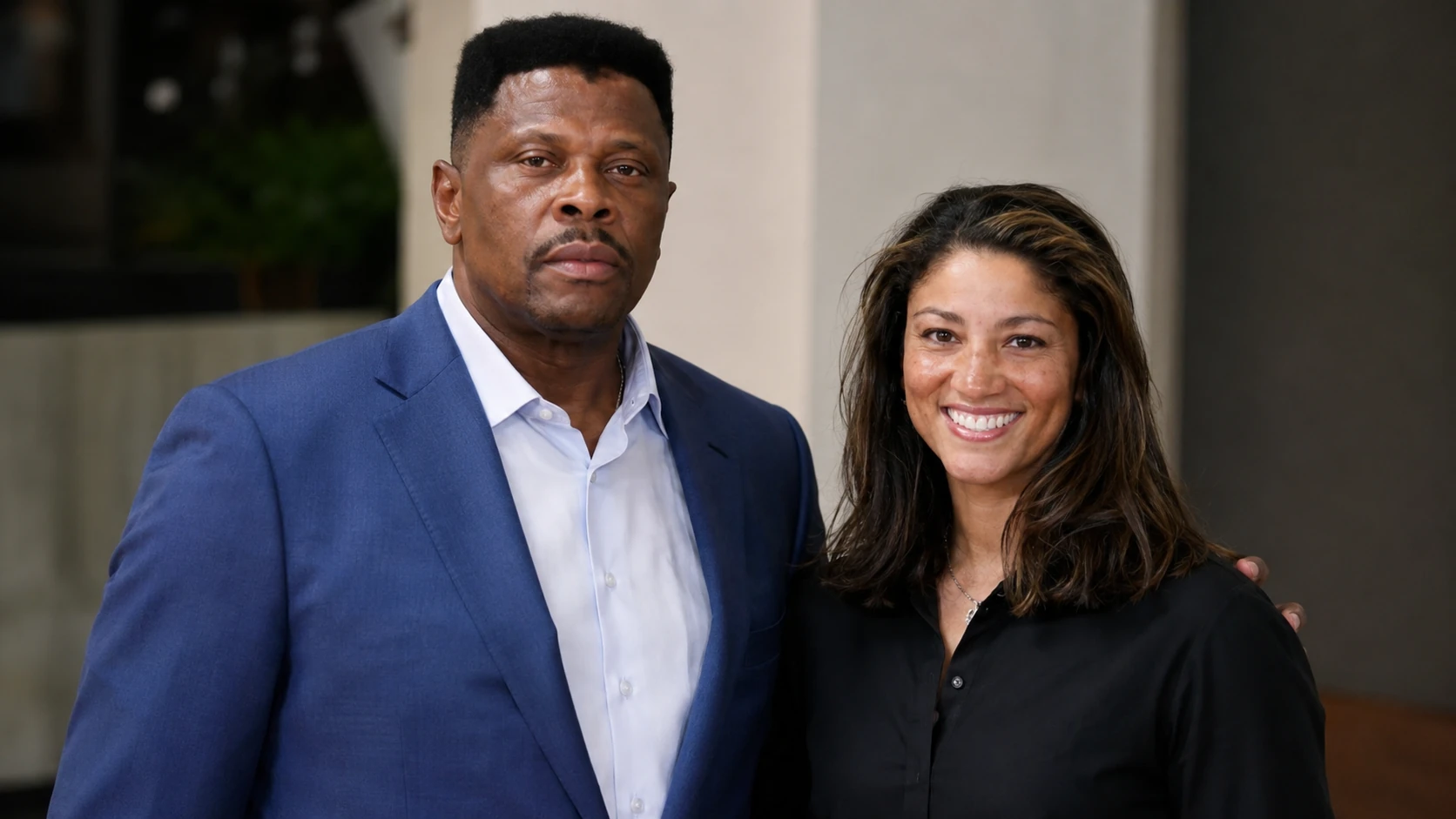
The story of Rita Williams-Ewing’s marriage to Patrick Ewing is well known in outline but often poorly understood in texture. The two met in 1983 in Washington, D.C. both working as congressional interns in the offices of different senators. At the time, Patrick was already a rising star from Georgetown University, but neither was yet defined by celebrity. Their relationship developed over several years, and they married on July 27, 1990, in a private ceremony. By then, Patrick had become the centerpiece of the New York Knicks, and the marriage placed Rita firmly inside one of American basketball’s most scrutinized households.
They had two daughters together, Randi Ewing and Corey Ewing. Randi went on to become a highly recruited volleyball player who attended Fordham University, while Corey followed in her father’s footsteps by attending Georgetown. Patrick Ewing Jr., who had been born in 1984 before the marriage, from a separate relationship was raised within the family and went on to play college basketball at Georgetown and had brief stints in the NBA and overseas leagues.
Rita filed for divorce in February 1998, after rumors surfaced publicly about Patrick’s alleged involvement with a New York Knicks dancer named Heather Errico. Rita’s public response was careful and measured. In a statement at the time, she said the couple was working toward an amicable resolution and directly denied there was any “significant other” in the picture as far as she was concerned. Her handling of that moment under significant media pressure became a defining public image of her character. She did not perform grief. She did not fuel tabloid coverage. She maintained her position and moved forward.
Since the divorce, Rita has remained single, according to publicly available sources. Her focus has been on her children, her writing, and her own life on her own terms.
Rita Williams-Ewing’s Height, Appearance, and Personal Details
Specific details about Rita Williams-Ewing’s height and weight have not been officially confirmed in any public record. Based on photographs taken at the Hue-Man Bookstore and Café on Frederick Douglass Boulevard in Harlem, where she was photographed for news outlets including Getty Images, she presents as a composed and elegant woman with a style that has consistently favored understated professionalism over celebrity flash.
What is publicly confirmed is her African American ethnicity and her American nationality. She does not maintain any verified presence on Instagram, Twitter/X, or other social media platforms, making candid public photographs the only visual record available. Her choice to remain off social media in 2026, when virtually every public figure maintains a digital presence, is itself a statement one consistent with the private, deliberate approach she has brought to every aspect of her public life.
You May Also Read: Stephanie Pomboy Age, Career & Net Worth: The Economist Who Saw It Coming
The Hue-Man Bookstore: The Chapter Her Story Rarely Gets Credit For
Of everything Rita Williams-Ewing built after her marriage ended, the Hue-Man Bookstore in Harlem stands as the most overlooked chapter. Most profiles mention it in passing one sentence, two at most. The reality was far more significant.
The Hue-Man Bookstore, located on Frederick Douglass Boulevard in Harlem, was one of the most important African American bookstores in New York City during its operating years. Rita was a co-owner, and her involvement went beyond financial investment. She helped organize community events, book signings, and literary talks that made the space a genuine cultural hub in a neighborhood undergoing the early stages of the gentrification that her own novel Brickhouse would later document. The store became known as a destination not just a retail outlet for readers, authors, and community members who wanted to engage with Black literature and ideas in a space that centered that work.
Rita also used the bookstore as a platform for her own literary career, launching Brickhouse from within its walls. That decision to ground her debut as a solo novelist in a community space she had helped build says something about her approach to both writing and entrepreneurship. She did not separate her commercial interests from her cultural commitments. She built them together, in the same room. When the bookstore eventually closed, as many independent bookstores have in the face of digital retail pressure, it left a gap in Harlem’s literary community that no single venue has since filled in quite the same way.
Conclusion
Rita Williams-Ewing’s significance lies in what she chose to build when the spotlight no longer required her presence. She entered public life as Patrick Ewing’s wife, navigated one of the NBA’s most scrutinized marriages, and emerged on the other side as a novelist, a bookstore co-founder, and a woman who refused to let one chapter define her. As of 2026, she continues to live privately and write a quiet legacy that speaks louder than most public ones.
FAQ
Q: Who is Rita Williams-Ewing?
Rita Williams-Ewing is an American author and entrepreneur best known as the former wife of NBA Hall of Famer Patrick Ewing. Beyond that connection, she holds degrees in nursing and law, co-authored the novel Homecourt Advantage, wrote the solo novel Brickhouse, and co-owned the Hue-Man Bookstore in Harlem.
Q: When did Rita Williams-Ewing and Patrick Ewing divorce?
Rita Williams-Ewing filed for divorce in February 1998 after more than seven years of marriage. The divorce was finalized the same year, amid widely reported rumors about Patrick Ewing’s alleged relationship with a Knicks dancer.
Q: What books has Rita Williams-Ewing written?
She co-authored Homecourt Advantage with Crystal McCrary Anthony, a novel about the emotional lives of women married to professional athletes. Her solo debut, Brickhouse, is set in Harlem and follows a fitness entrepreneur facing gentrification. She also created the Patrick’s Pals children’s book series.
Q: What is Rita Williams-Ewing’s net worth in 2026?
Rita Williams-Ewing’s net worth is publicly estimated at between $1 million and $2 million as of 2026, derived from her book royalties, her divorce settlement, and her co-ownership of the Hue-Man Bookstore in Harlem. These are estimates only and have not been officially confirmed.
Q: How did Rita Williams-Ewing meet Patrick Ewing?
The two met in 1983 in Washington, D.C., when both were working as congressional interns. Rita was a summer intern in Senator Bill Bradley’s office, while Patrick was interning for another senator and would sometimes deliver materials to Bradley’s office.
Q: Where did Rita Williams-Ewing go to school?
According to sources including Briefly.co.za citing HarperCollins publisher records, Rita Williams-Ewing attended Howard University in Washington, D.C., where she earned degrees in both nursing and law.
Q: Does Rita Williams-Ewing have children?
Yes. She has two daughters with Patrick Ewing Randi Ewing, who played college volleyball at Fordham University, and Corey Ewing, who attended Georgetown. Patrick Ewing Jr., who played briefly in the NBA, is also part of the family unit.
Q: Is Rita Williams-Ewing on social media?
No. As of 2026, Rita Williams-Ewing maintains no verified presence on Instagram, X (Twitter), or any other public social media platform. She has consistently chosen a private life over a digital one.
About the Author